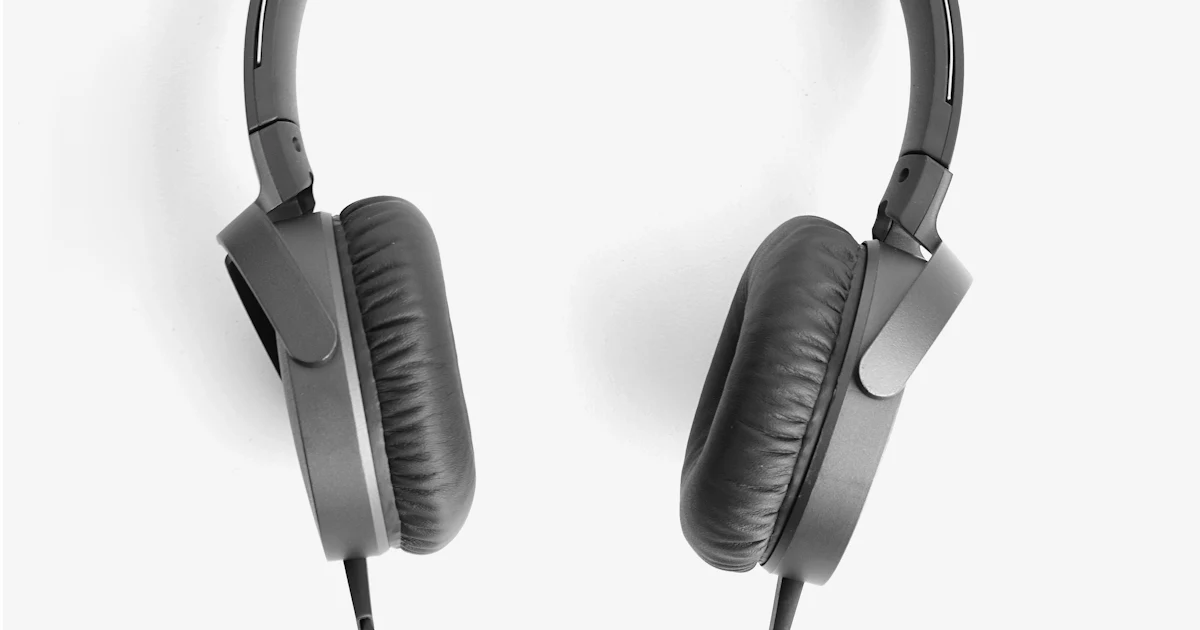
The best headphones for binaural beats are the comfortable stereo pair you already own. Headphones themselves are mandatory — a speaker mixes the two tones in the air and the beat never forms — but the model barely matters. If you are buying, the six picks below start at about $20 and are chosen for comfort and honest tuning, not audiophile specs. Nothing on this page is an affiliate link to a headphone; I don't earn a cent from any of these.
Of all the questions I get about binaural beats, this is the one where the answer surprises people most. They expect me to recommend a $300 pair. Instead I tell them the €15 earbuds in their drawer will probably work — but the speaker on their desk absolutely will not. The reason isn't snobbery about sound. It's the physics of how the effect is made in the first place.
The track that survives cheap headphones
Since your existing earbuds are probably fine hardware-wise, the real bottleneck is the audio itself. Genius Wave's studio-produced sessions are what I actually run — they stay clean and gentle even on a basic $20 pair, which is the whole point of not overspending here.
Affiliate link — I earn a small commission at no extra cost to you.
Why headphones aren't optional
A binaural beat isn't a sound that's recorded into the track. It's an illusion your brain creates. Play one steady tone in your left ear and a slightly different tone in your right, and your brain notices the gap and "hears" a third, pulsing beat at the difference between them — a 210 Hz tone on one side and a 200 Hz on the other produces a 10 Hz beat that exists only inside your head.
Here's the catch. The moment those two tones come out of a speaker, they travel through the same air and blend before they hit your ears. Both ears end up hearing the same mixed signal, the difference disappears, and the beat never forms. Headphones are the only everyday device that keeps the left and right tones fully separate all the way to each eardrum. That's their entire job here — not to sound good, just to keep the two channels apart.
What actually matters (only three things)
Once you accept that headphones are required, the shopping list gets short. Three things genuinely affect your sessions:
- Real stereo separation. Both earpieces must play, and the track must reach you in stereo — not collapsed to mono. This is the one spec that isn't optional. Almost every headphone passes it; the failures are usually software (a phone "mono audio" accessibility setting left on) rather than the hardware.
- Comfort for 20–45 minutes. You'll wear these still, often with your eyes closed, sometimes lying down. A pair that pinches after ten minutes will sabotage the calm you're chasing. This matters more than any sound spec.
- Honest low-end that isn't overhyped. Binaural beats sit at low, quiet frequencies. You don't need booming bass — in fact, headphones that artificially pump the bass can muddy the gentle carrier tones. Flat and clean beats loud and exaggerated.
Notice what's not on that list: brand, price, "hi-res" certification, driver size. None of them change whether the beat forms or how well it works. Which is why any spend past a comfortable pair usually goes further into the track library (a program like Genius Wave, in my case) than into another set of cans.
The 6 best headphones for binaural beats
Every pair below clears the only bar that matters — genuine left-right separation — so none of them will make the beat form "better" than another. What separates them is comfort over a 30-minute motionless session, whether the tuning stays honest at low volume, and how little you have to spend. That's the whole ranking logic. They're ordered by what I'd actually reach for, not by price.
| Pick | Type | Rough price | Best for |
|---|---|---|---|
| The pair you already own | Anything stereo | $0 | Almost everyone — start here |
| Koss Porta Pro | On-ear, wired | ~$40 | Lightest clamp for long sessions |
| Audio-Technica ATH-M20x | Over-ear, wired, closed | ~$50 | Flat tuning, zero variables |
| Philips SHP9500 | Over-ear, wired, open-back | ~$75 | The most comfortable seated wind-down |
| Sony WH-CH720N | Over-ear, wireless, ANC | ~$100 | Keeping the volume genuinely low |
| Any true-stereo wireless buds | In-ear, wireless | ~$100+ | Listening lying down or in bed |
Street prices move constantly — treat these as bands, not quotes. None of these are affiliate links, and I get nothing if you buy any of them.
1. The pair you already own
The honest first choice · $0I'm not being cute. The three criteria above are met by essentially every working pair of headphones made in the last twenty years, including the tangled earbuds in your drawer and the ones that came free with a phone. Run the 30-second check further down; if both channels play and mono audio is off, you are done. The beat that forms in your head will be identical to the one a $400 pair produces.
Buy something new only if what you own is genuinely uncomfortable after ten minutes — that's a real reason, and the only one on this list.
2. Koss Porta Pro
Lightest clamp · on-ear, wired · ~$40On-ear is usually the worst shape for this, because most on-ears clamp hard against the side of your head. The Porta Pro is the long-running exception: its spring-steel headband and foam pads sit rather than grip, and the whole thing weighs almost nothing. That makes it one of the few pairs you can genuinely forget about halfway through a session.
It's been in production since the 1980s, which tells you something about the design. The tuning is warm rather than flat — a mild strike against it — but at the whisper-level volume you should be using, that colouring barely registers.
3. Audio-Technica ATH-M20x
No variables · over-ear, wired, closed · ~$50The boring, correct answer if you want to buy once and never think about it. It's a wired closed-back monitor: no battery, no pairing, no app, no spatial-audio mode buried in a menu waiting to sabotage you. Plug it in and the two channels arrive separate, every time.
Its tuning is closer to flat than most consumer headphones, which suits the "honest low-end" criterion — it won't inflate the carrier tones into mush. The cable is fixed rather than detachable, so it's a lifetime-of-the-cable purchase.
4. Philips SHP9500
Most comfortable seated session · over-ear, open-back · ~$75If your routine is sitting or reclining still at home with your eyes closed, this is the most comfortable option here by a clear margin. It's open-back with large, light pads and very little clamp — the closest thing to wearing nothing.
The trade-off is inherent to open-backs: they leak sound both ways. Anyone in the room hears your session, and you hear the room. That's fine alone in a quiet house and useless on a train. Note that open-back design does not weaken the beat — the channels stay fully separate at each ear, which is all the effect requires.
5. Sony WH-CH720N
Low-volume habit · over-ear, wireless, ANC · ~$100The one case where a feature genuinely earns its money. Active noise cancellation doesn't strengthen the beat, but it removes the reason people creep the volume up — background noise. Being able to hear a quiet track clearly over a fan or traffic is the single best thing you can do for your hearing over months of daily sessions.
This one is picked over pricier ANC cans specifically because it's unusually light for the category, at roughly 190 grams. Weight is what you notice after thirty motionless minutes, not cancellation depth.
6. Any true-stereo wireless earbuds
For listening lying down · in-ear, wireless · ~$100+I'm deliberately not naming one model, because for this purpose they're interchangeable — AirPods, Galaxy Buds, Nothing Ear, or the mid-range pair you already have. If you listen in bed, nothing else comes close: earbuds are the only shape that doesn't press awkwardly against a pillow when you turn your head.
Two cautions, and they apply to every brand. Make sure both buds are actually in and connected — a single bud collapses the whole effect, since one ear can't produce a binaural beat by itself. And turn off spatial or 3D audio, which deliberately blends the channels to simulate a room.
What are "binaural headphones"? (There's no such thing)
This one comes up often enough to be worth stating plainly: there is no category of headphone called binaural, and no product is specially built for binaural beats. Any marketing that sells you a "binaural headset" at a premium is selling you a normal stereo headphone with a sticker on the box.
The confusion is understandable, because "binaural" appears in two different places. Binaural recording is a microphone technique — capturing audio with two mics in a dummy head to reproduce a 3D soundstage. Binaural beats are the entrainment effect this site is about. Neither requires special hardware on the listening end; both just need the left and right channels to arrive separately. Your existing headphones are already "binaural headphones."
Do binaural beats work without headphones?
No — and this is the one place where the answer is genuinely absolute rather than "it depends."
The beat is not in the file. Nothing in the audio track pulses. What the track contains is two steady tones, and the pulse is manufactured by your brainstem when it compares what each ear received. Remove the separation and there is nothing left to compare, so there is nothing to hear. A speaker — a laptop, a phone, a smart speaker, a soundbar — releases both tones into the same air, where they blend into a single mixed signal that reaches both ears identically. You'll hear pleasant ambient tones and no entrainment effect whatsoever.
Three related cases people ask about, all failures for the same reason:
- One earbud only. Doesn't work. One ear receives one tone and there's no second tone to compare it against.
- Phone speaker held close to your head. Doesn't work. Proximity doesn't undo the mixing that already happened in the air.
- "Mono audio" accessibility setting left on. Doesn't work, even with perfect headphones — the phone merges the channels before they reach the drivers. This is the most common silent failure, and the reason the setup check below exists.
If you want an entrainment effect through a speaker, you need isochronic tones instead — those are single pulsed tones that carry the rhythm in the audio itself, so they survive being played out loud.
Do binaural beats work with earbuds and AirPods?
Yes, completely. Earbuds are headphones as far as the effect is concerned — each driver sits in its own ear canal, which is the most isolated delivery of all. There is no penalty versus over-ears, and if you listen lying down there's a real advantage.
"Best earbuds for binaural beats" therefore has the same answer as the rest of this page: the ones you find comfortable. Fit matters more than usual, though, because a bud that works loose during a still session drops a channel and silently kills the beat without you noticing you've lost it. Snug seal on both sides, then forget them.
For AirPods specifically, the only genuine gotcha is Apple's Spatial Audio. When it's on — especially with head tracking — it processes the stereo image to simulate sound coming from a fixed point in a room, which is exactly the channel-blending you're trying to avoid. Turn it off in the Bluetooth settings for that device before your first session.
Wired vs. Bluetooth: does it matter?
Barely. The usual knock against Bluetooth is latency — the tiny delay between the audio and your screen. That matters for gaming or video, but for binaural beats there's nothing to sync to. You're listening with your eyes closed. A quarter-second of delay is invisible.
The only real advantage of wired is reliability: no battery to die mid-session, no pairing hiccups, and a guaranteed clean stereo signal. If you already own AirPods or any decent Bluetooth pair, use them. If you're buying fresh and want the simplest possible setup, a cheap wired pair removes every variable. Both are fine.
Over-ear, on-ear, or earbuds?
This comes down to your setting, not the science. All three keep the channels separate, so all three work.
- Over-ear is the most comfortable for long, still sessions and blocks the most outside noise — my pick for a wind-down routine at home. The downside is you can't lie on your side in them.
- Earbuds / in-ear win if you listen lying down or on the move, as covered above. Just make sure both fit snugly so neither channel drops out.
- On-ear is a middle ground that usually clamps hardest, which makes it the weakest default for long, motionless sessions. The exception is a light-clamping design like the Porta Pro above — judge the specific pair, not the category.
What you can safely ignore
Marketing will push a lot of features that make no difference to entrainment:
- "Hi-res audio" and huge frequency ranges. The beat lives in a narrow, low band that any headphone from the last two decades covers easily.
- Surround / spatial audio modes. These deliberately mix the channels to simulate a room. That's the exact opposite of what you want — turn them off, or you can weaken the effect.
- Premium price tags. A studio-monitor pair and a $20 pair form the same beat. Spend the money on comfort, not prestige.
Active noise cancellation is the one "extra" worth having, and not because it strengthens the beat. It lets you keep the volume genuinely low while still hearing the track — which, as I cover in the safety guide, is the single most important habit for protecting your hearing. That low-volume habit is also why I lean on a clean, consistently mixed program like Genius Wave instead of random YouTube uploads.
The headphones matter less than the track
Once your channels are separate, the quality of the audio itself is what carries the session. Free tracks are often harshly mixed at the exact low volume you're trying to keep. Genius Wave's sessions are studio-produced with clean, consistent carrier tones — the kind that stay gentle even through basic headphones.
My full review — it contains affiliate links, so I earn a commission if you buy, at no extra cost to you.
A 30-second setup check
Before your first proper session, run this quick test so you know the beat is actually reaching you:
- Both ears playing? Tap each earpiece — you should hear audio in each one independently.
- Mono audio off? Check your phone or computer accessibility settings; "mono audio" collapses the channels and kills the beat.
- Spatial / surround off? Disable any 3D or spatial-audio mode.
- Volume just above a whisper. You should be able to hold a conversation over it. Louder isn't stronger — it only risks your hearing.
- Comfortable enough to forget them? If you're aware of the headphones after five minutes, you'll never fully relax. Adjust or swap before you commit to a routine.
Skip the gear upgrade, upgrade the track
Genius Wave comes with a money-back guarantee, so pairing your existing headphones with a proper studio-mixed track for a week costs you nothing but download time. If the effect isn't cleaner than what you're getting from free tracks, refund it.
Heads up: the review contains affiliate links. I earn a commission if you buy through it, at no extra cost to you.
Frequently asked questions
Do you really need headphones for binaural beats?
Yes. A binaural beat only exists because each ear receives a slightly different tone and your brain fills in the difference. Played on a speaker, the two tones mix in the air before they reach you, so the beat never forms. Stereo headphones — any kind — are what make the effect possible.
Are expensive headphones better for binaural beats?
No. Binaural beats live in low, quiet frequencies that almost any working headphones reproduce fine. You don't need audiophile gear or premium sound quality. Comfort for long sessions and solid left-right channel separation matter far more than price.
Can I use AirPods or Bluetooth headphones for binaural beats?
Yes. As long as both earpieces play and the stereo channels aren't collapsed to mono, Bluetooth works. Latency doesn't matter here because there's no video to sync to — you're just listening. Wired is a touch more reliable, but wireless is perfectly fine.
Do noise-cancelling headphones help with binaural beats?
They can, indirectly. Active noise cancellation lets you keep the volume low while still hearing the track clearly, which protects your hearing. It doesn't strengthen the beat itself, but a quieter background makes it easier to relax into the session.
Do binaural beats work without headphones?
No. The pulse isn't recorded in the track — your brain creates it by comparing a slightly different tone in each ear. A speaker mixes both tones in the air before they reach you, so both ears get an identical signal and there is nothing to compare. The same applies to using a single earbud, or leaving your phone's "mono audio" setting on. If you need something that works through speakers, use isochronic tones instead.
Do binaural beats work with earbuds?
Yes, exactly as well as over-ear headphones. Each bud sits in its own ear canal, which is the most isolated delivery there is. The only thing to watch is fit: a bud that works loose mid-session drops a channel and silently kills the effect. Make sure both are seated snugly.
What are binaural headphones?
There's no such thing as a binaural headphone. It isn't a product category, and nothing is specially engineered for binaural beats — any stereo headphone already does everything the effect requires. If a product is sold as a "binaural headset" at a premium, it's a normal pair of headphones with different marketing.
What are the best budget headphones for binaural beats?
The pair you already own, honestly — the effect doesn't improve with price. If you're buying new and want the cheapest thing that's genuinely comfortable for a 30-minute still session, something like the Koss Porta Pro at around $40 or the Audio-Technica ATH-M20x at around $50 covers it. Spending past that buys comfort and build quality, not a stronger beat.